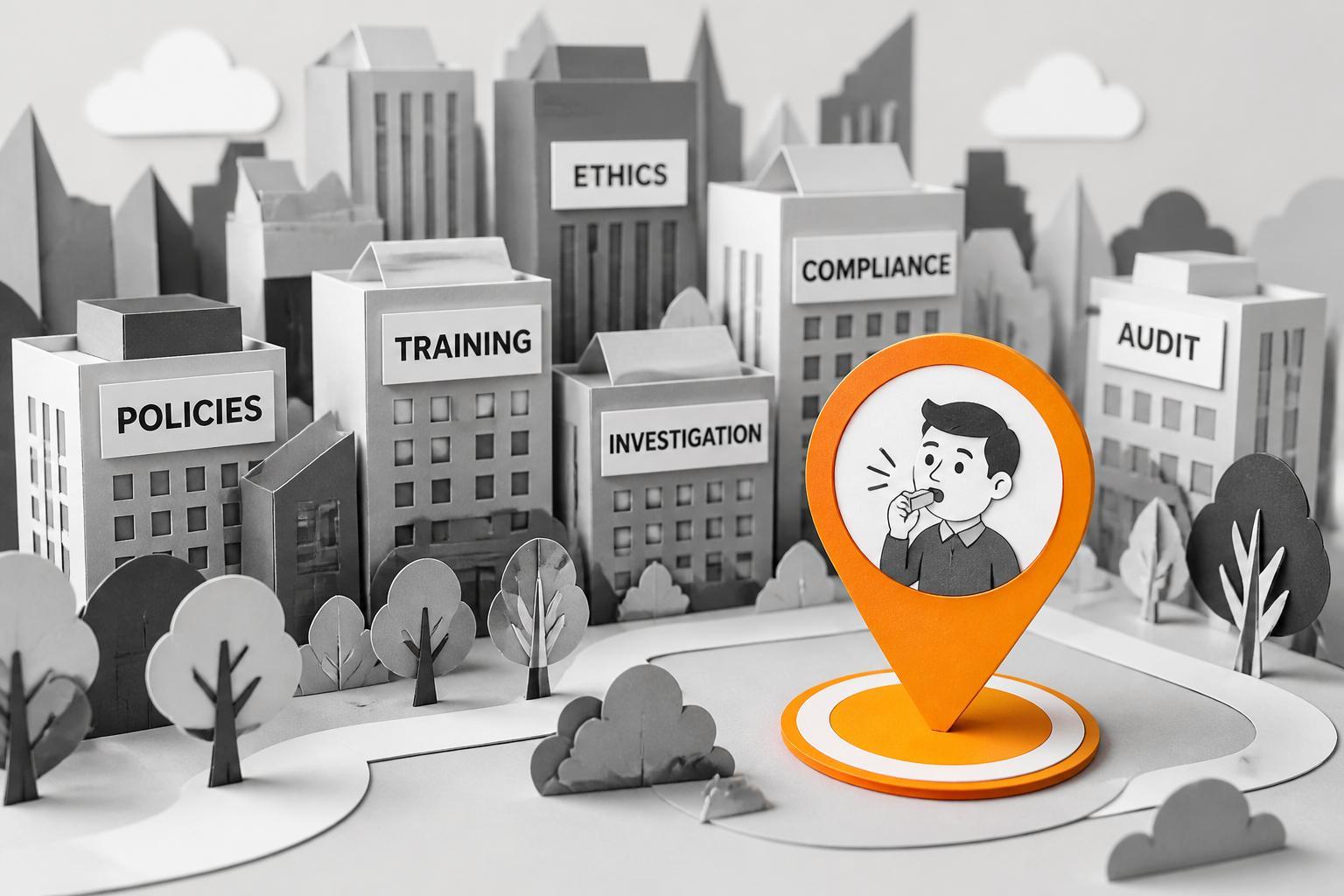
Your training program is now a frontline defense against a new category of compliance risk. The Department of Justice Antitrust Division's Whistleblower Rewards Program, launched in 2025, has changed the incentives for employees who suspect price-fixing, bid-rigging, or market allocation. Whistleblower awards in large cartel cases could reach hundreds of millions of dollars, and multiple employees can collect rewards in the same investigation.
This means your training content needs an update. Here's a practical checklist you can adapt to help employees understand their reporting obligations without inadvertently creating whistleblower risk.
Purpose of This Checklist
This checklist is designed to help you create or revise antitrust compliance training that addresses the new whistleblower environment. It's for training managers who need to:
- Clearly explain reporting channels without confusing external options
- Strengthen internal detection systems before employees consider outside rewards
- Maintain trust while acknowledging employees now have financial incentives to report externally
You're not trying to prevent legitimate whistleblowing. You're aiming to create conditions where employees feel confident reporting internally first, allowing your organization to detect and respond to potential violations before external reports compress your decision timeline.
Prerequisites
Before using this checklist, ensure:
Your organization has functional internal reporting channels. If employees don't trust your hotline or speak-up program, this training won't help. Fix the reporting infrastructure first.
You've consulted legal counsel about your antitrust risk profile. This checklist addresses training design, not legal strategy. Your legal team should guide the substantive compliance content.
You understand the Memorandum of Understanding (MOU) that governs the Speak-Up Program. Key points: employees can qualify for rewards even after the Division knows about the underlying conduct, multiple whistleblowers can recover in the same investigation, and corporate leniency markers cut off employee eligibility.
The Checklist
Section 1: Internal Reporting Emphasis
Purpose: Establish that your organization prioritizes early detection and wants employees to report concerns internally before considering external channels.
- Training states clearly: "Report antitrust concerns to [specific channel] immediately."
- Training explains what happens after an internal report (investigation triage, confidentiality protections, timeline expectations).
- Training identifies who receives reports and how they're protected from retaliation.
- Training avoids language that discourages reporting or suggests the company will "handle it quietly."
Customization guidance: Name your actual reporting channels. If you have multiple options (hotline, manager, compliance officer, ombudsperson), list them all and clarify that employees can choose. Don't create artificial barriers like "talk to your manager first."
Section 2: Antitrust Violation Recognition
Purpose: Help employees identify conduct that could trigger whistleblower consideration, so they report internally before external incentives become relevant.
- Training defines price-fixing, bid-rigging, and market allocation in plain language.
- Training provides industry-specific examples relevant to your employees' roles.
- Training explains why these violations matter (harm to customers, criminal exposure, individual liability).
- Training clarifies that intent matters: not every competitor conversation is illegal, but certain topics are off-limits.
Customization guidance: Generic antitrust training doesn't work. If your employees attend trade association meetings, address that scenario. If they negotiate with distributors who also carry competitor products, address that. Make the red flags concrete.
Section 3: Timing and Urgency
Purpose: Communicate that speed matters in antitrust reporting, without creating panic or suggesting that delay equals complicity.
- Training states: "Report concerns as soon as you become aware of them."
- Training explains why early detection protects the organization and employees.
- Training avoids suggesting that employees should investigate on their own before reporting.
- Training clarifies that good-faith reports are protected even if the concern turns out to be unfounded.
Customization guidance: Don't say "immediately report any potential violation or face consequences." Instead: "If you see or hear something that concerns you, tell us right away so we can assess it together."
Section 4: External Reporting Context
Purpose: Acknowledge that external whistleblower programs exist without positioning them as the preferred option or creating the impression that internal reporting is futile.
- Training mentions (briefly) that government whistleblower programs exist.
- Training explains that the organization takes internal reports seriously and investigates them.
- Training does not provide detailed instructions on how to file external whistleblower claims.
- Training emphasizes anti-retaliation safeguards for internal reporters.
Customization guidance: This is the most sensitive section. You're walking a line between transparency (employees will learn about whistleblower rewards regardless of what you say) and not inadvertently marketing the external option. Keep it factual and brief: "Government agencies have whistleblower programs. We want you to report internally first so we can address concerns quickly and protect everyone involved."
Section 5: Consequences and Accountability
Purpose: Explain what happens when violations occur, reinforcing that the organization takes antitrust compliance seriously.
- Training describes potential consequences for antitrust violations (criminal prosecution, fines, individual liability).
- Training clarifies that cooperation with investigations is expected.
- Training explains that the organization will take corrective action when violations are confirmed.
- Training avoids suggesting that reporting a violation implicates the reporter in wrongdoing.
Customization guidance: Be specific about your organization's track record if you have one. "Last year we investigated 12 antitrust concerns raised through our hotline. Three resulted in policy changes, and one led to employee discipline." Transparency builds trust.
How to Customize It
For high-risk industries (construction, healthcare, manufacturing with trade association involvement): Add a sixth section on competitor interaction protocols. Specify what topics are prohibited in competitor conversations and what employees should do if a competitor raises pricing, capacity, or customer allocation.
For multinational organizations: Address jurisdictional differences. The DOJ program applies to U.S. antitrust violations, but employees in other countries may face different whistleblower regimes. Clarify which reporting channel applies where.
For organizations with recent antitrust scrutiny: Acknowledge it directly. "You may have heard about [investigation/inquiry]. Here's what we're doing in response and why your vigilance matters going forward." Ignoring the elephant in the room undermines credibility.
Validation Steps
After you've customized and deployed this training:
Test employee comprehension. Can employees correctly identify which scenarios require immediate reporting? Can they name your internal reporting channels without looking them up?
Track reporting patterns. Are you seeing an increase in antitrust-related reports after training? If not, either your training isn't landing or employees don't trust the channel.
Review with legal counsel. Have your legal team confirm that the training content aligns with your organization's antitrust compliance program and doesn't create unintended risks.
Update annually. The Speak-Up Program is new. Enforcement priorities, case outcomes, and employee awareness will evolve. Your training should evolve with them.
The goal isn't to prevent employees from ever filing whistleblower claims. The goal is to create an environment where internal reporting is the obvious first choice because it's trusted, effective, and responsive. That's the only sustainable defense against compressed decision timelines and external reporting incentives.